About
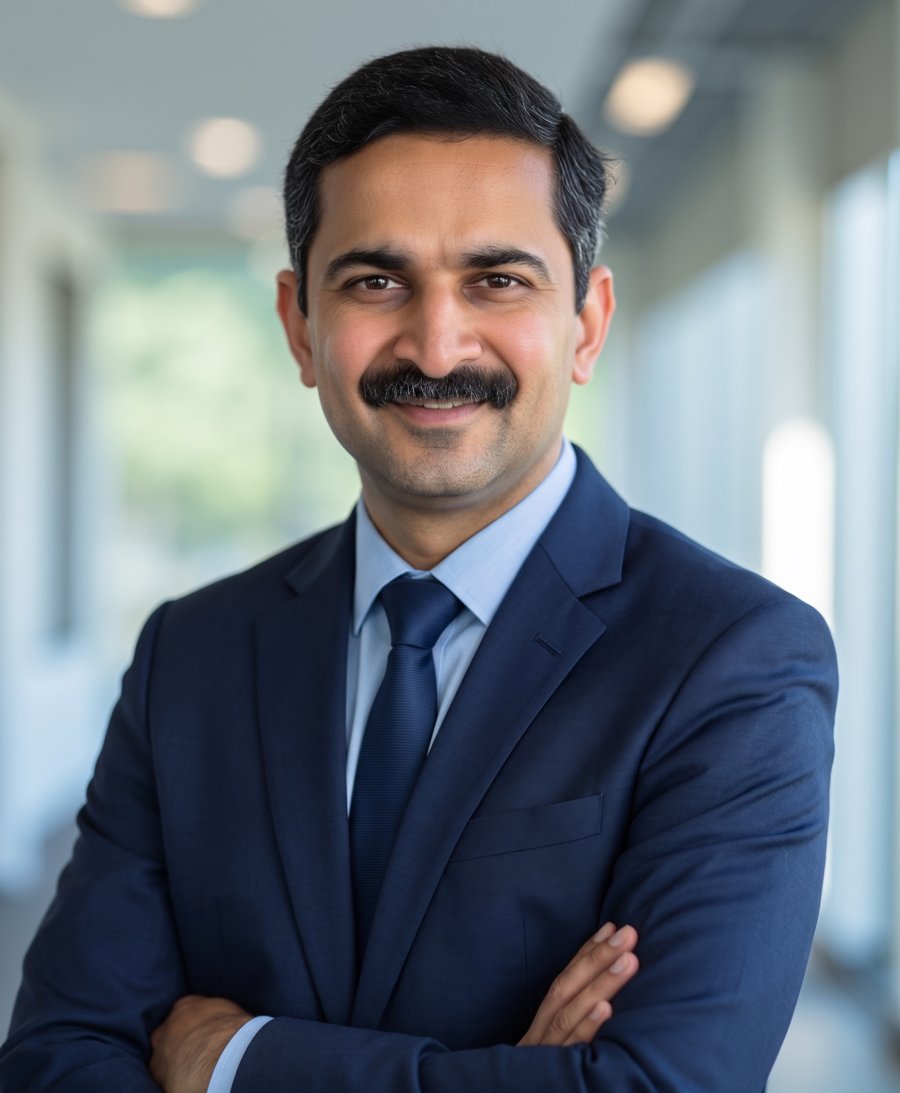
Dr. Niraj Bhatt is the Founder and Principal Consultant of Pristine Biosciences, which he established to give emerging biopharma companies direct access to phase-appropriate analytical and quality expertise. With more than 20 years of biopharma experience spanning drug discovery, contract research and quality control for cell therapy manufacturing, Dr. Bhatt helps clients move programs from preclinical development through IND and Phase 1–2 with confidence.
His consulting focuses on release and stability testing, method development through validation, potency and bioassay strategy, deviations and CAPA, IND CMC documentation, and the selection and oversight of CDMOs and contract laboratories. Having worked on both the sponsor and CRO sides of the industry, he brings a practical, cost-conscious approach that balances regulatory expectations with each program’s stage and budget.
Professional experience
CRISPR Therapeutics
At CRISPR Therapeutics, Dr. Bhatt built and led Quality Control for gene-edited CAR-T cell therapy manufacturing, gaining hands-on experience with the challenges clients face on the path from IND to the clinic. He developed the QC readiness strategy for in-process, release and stability testing that supported 12 GMP batches in a single year, led nine method transfer and qualification activities, and oversaw contract testing laboratory partners. He owned deviations, investigations and change controls, authored IND CMC sections, and implemented LIMS for sample management. He also delivered approximately $2 million in savings through risk-based, phase-appropriate redesigns of qualification and stability programs.
Charles River Laboratories
As a Study Director at Charles River Laboratories, a leading global CRO, Dr. Bhatt led GLP cell-based bioassay studies, including cytokine release and ELISpot assays, for cell therapy products such as CAR-T cells and CD34⁺ stem cells. He designed, drafted and reviewed analytical methods, gaining direct insight into how contract laboratories plan, execute and report studies for sponsors.
PPD (now part of Thermo Fisher Scientific)
At PPD, another leading global CRO, Dr. Bhatt served as a Technical Project Manager and primary client contact, managing multiple cGMP potency assay programs for biosimilars and antibody-drug conjugates using cell-based potency assays. He led method qualification and optimization to ICH and USP standards and authored investigations, deviations, trend analyses, CAPAs and change controls, while consistently meeting turnaround targets. This CRO-side experience informs how he now selects and oversees contract laboratories for clients.
Sun Pharma Advanced Research Company
Dr. Bhatt began his career in drug discovery at Sun Pharma Advanced Research Company, part of one of India’s leading pharmaceutical companies. There he designed efficacy screens for new chemical entities and established 13 disease-relevant animal models to characterize efficacy, safety, toxicity and PK/PD relationships. His hit-to-lead work contributed to an IND for a molecule that advanced to Phase II clinical trials.
Research background
Dr. Bhatt completed six years of postdoctoral research at Johns Hopkins University School of Medicine and the University of Maryland, Baltimore, where he developed new cell-based models and assays.
Division of Cardiology, Johns Hopkins University
His first postdoctoral project focused on restoring heart function in diabetes. He showed that oxidative stress disrupts the redox balance of heart muscle and reduces its contractility, and that restoring redox balance improves cardiac function.
Department of Radiation Oncology, Johns Hopkins University
His second postdoctoral project focused on patient-derived stem cells for a rare disease. He established the lab’s first induced pluripotent stem cell (iPSC) program, developing an integration-free method to reprogram patients’ blood cells into iPSCs as a disease model for Ataxia-Telangiectasia.
University of Maryland, Baltimore
He studied energy production in brain cells, investigating mitochondrial bioenergetics and drug mechanism of action in astrocytes and microglia under physiological oxygen and proinflammatory conditions. His work addressed whether shifting the metabolism of microglial cells could reduce inflammation in the brain. He also established siRNA and immunohistochemistry methods in the lab.